Delinquency in maintenance fee payments is one of the most serious and frequent problems facing condos in Mexico. According to real estate industry data, between 30% and 60% of condo owners in the country have some degree of payment delay. This situation not only affects the condo's finances but also deteriorates services, common areas, and ultimately the value of all properties.
The good news is that delinquency is not an unsolvable problem. With the right strategies, empathetic communication, and adequate technological tools, it's possible to significantly improve collection and build a culture of responsible payment in your community.
In this guide, we'll explore the causes of delinquency, 10 proven strategies to improve collection, the legal framework that supports you, and how automation can transform your condo's financial management.
The Delinquency Problem in Mexican Condos
Delinquency in condo maintenance fees is a widespread phenomenon in Mexico. According to the Social Attorney's Office of Mexico City (PROSOC) and various administrator associations, delinquency rates in the country range between 30% and 60%, depending on the area and type of development.
The impact is devastating:
- Service deterioration: Without sufficient resources, security is reduced, cleaning is neglected, and maintenance is postponed indefinitely.
- Property devaluation: A poorly maintained condo loses value in the real estate market, affecting all owners, even those who do pay.
- Neighbor conflicts: Delinquency generates resentment between those who pay and those who don't, fracturing community life.
- Legal and structural risk: Lack of preventive maintenance can lead to serious infrastructure problems, with legal liabilities for the administration.
- Vicious cycle: Residents who do pay see that their fees don't translate into improvements, which demotivates them and can turn them into new delinquents.
It's important to understand that behind every unpaid fee there's a story. Delinquency is rarely simply "bad will." Understanding the real reasons allows us to design more effective and empathetic strategies.
Why Don't Residents Pay Their Fees?
Before implementing any collection strategy, it's essential to understand the reasons behind delinquency. Identifying the cause allows you to apply the correct solution:
1. Forgetfulness or disorganization Many residents simply forget the payment date. Without automatic reminders, the fee falls to the bottom of the priority list. This is, paradoxically, one of the easiest problems to solve with technology.
2. Distrust in management When residents don't see clear reports of how their fees are spent, they lose motivation to pay. "Why should I pay if I don't know where my money goes?" is a phrase every administrator has heard. Financial transparency is the best response to this objection.
3. Inconvenient payment process If paying requires going to a bank, standing in line, or making complicated transfers, many residents postpone it. Limited payment methods are a real barrier that discourages compliance.
4. Financial hardship It's important to acknowledge that some residents genuinely face financial difficulties. Unemployment, medical emergencies, or economic crises can make timely payment impossible. An empathetic approach with flexible options is more effective than threats.
5. Disagreement with management Some residents withhold payment as a form of protest: over decisions they consider unfair, construction they didn't approve, or services they consider deficient. While this attitude is not legally valid as justification, ignoring it only worsens the problem.
Understanding these reasons doesn't mean justifying delinquency, but rather designing strategies that address the root of the problem instead of just its symptoms.
10 Proven Strategies to Improve Fee Collection
These strategies have been successfully implemented in hundreds of condos. The key is to combine several of them to create a comprehensive collection management system.
1. Offer multiple payment channels The easier it is to pay, the more people will pay on time. Offer bank transfers, direct debit, credit/debit card payments, convenience store payments (OXXO, 7-Eleven), and online payments. Eliminating friction in the payment process can improve collection by up to 25%.
2. Implement automated reminders Send notifications via email, SMS, or push notifications 5 days before the due date, on the due date, and 3 days after if no payment has been recorded. Consistency in reminders significantly reduces delinquency caused by forgetfulness.
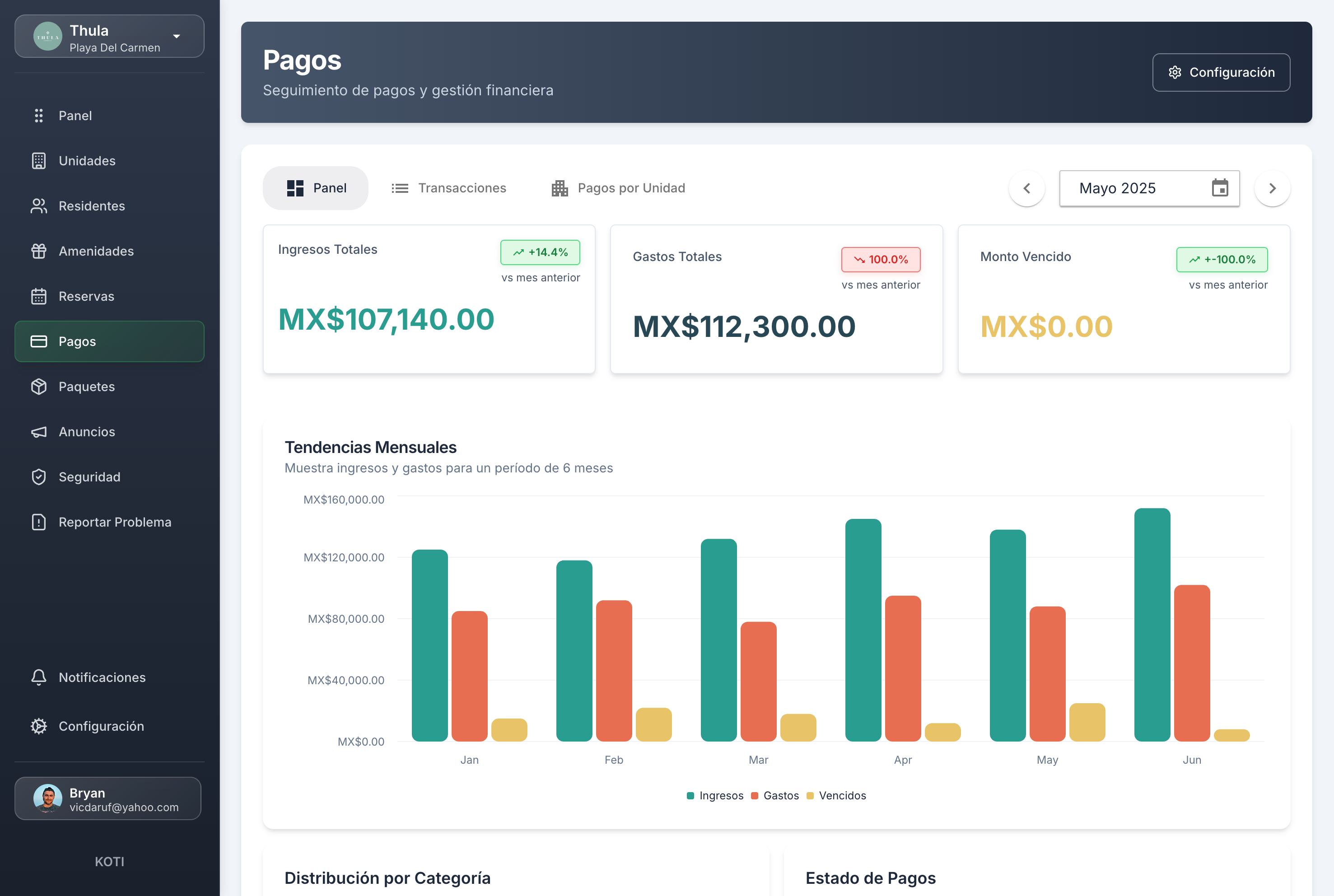
3. Publish transparent financial reports Share detailed monthly financial statements showing income, expenses, and where every peso goes. When residents see their money is being used correctly, willingness to pay increases. Use Koti's financial module to generate professional reports automatically.
4. Early intervention Don't wait for debt to accumulate for months. At 15 days past due, contact the resident directly. An empathetic call asking "Is there anything we can help you with?" is much more effective than a threatening notice on their door.
5. Establish clear and gradual consequences Define a progressive scheme: late fees (typically 2% to 5% monthly), restriction of amenity use, suspension of non-essential services, and as a last resort, legal action. Make sure these consequences are established in the regulations and known to everyone.
6. Offer payment plans for accumulated debts For residents with significant debts, negotiate realistic payment agreements. It's better to receive consistent partial payments than nothing at all. A 6 to 12-month plan with fixed monthly payments can be the difference between recovering the debt or losing it.
7. Create incentives for on-time payment Recognize and reward those who pay on time: early payment discounts (5-10% in the first 5 days of the month), quarterly raffles among current residents, or public recognition (with their consent) in the community newsletter.
8. Foster a sense of community Organize community events, share condo achievements, and show how fees improve everyone's life. When residents feel part of a community, payment commitment increases naturally.
9. Professionalize invoicing Send clear, professional, and timely account statements. Include the fee breakdown, due date, available payment methods, and the resident's balance. Koti's resident management allows you to generate and send these documents automatically.
10. Automate the entire process with technology Automation eliminates human errors, reduces administrative costs, and ensures consistency. From charge issuance to reminders to payment reconciliation, Koti's financial tools digitize the entire collection cycle so you can focus on what truly matters: your community.
Legal Framework for Fee Collection in Mexico
Understanding the legal framework is essential for your collection strategy to be effective while staying within the bounds of the law. In Mexico, condo fee collection is regulated by several pieces of legislation:
Federal Consumer Protection Law (LFPC) While this law protects consumers, condominium relationships are primarily governed by state condominium property laws. However, collection practices must respect general principles of dignified treatment and non-discrimination.
State condominium property laws Each state has its own legislation. For example, the Condominium Property Law of Mexico City establishes:
- Payment obligation: All condo owners are obligated to pay maintenance fees approved at assembly.
- Late fees: Late interest charges may be applied as established in the regulations.
- Judicial action: Management can initiate commercial executive proceedings to collect overdue fees, as the condo's constitutive act has the character of an executive title.
What you CAN do as an administrator:
- Apply late fees established in the regulations
- Restrict use of non-essential amenities (party room, gym, pool)
- Limit voting rights in assemblies for delinquent owners
- Post the delinquent list (without sensitive personal data) in common areas
- Initiate legal collection proceedings
- Report the debt to credit bureaus (if provided for in the regulations)
What you CANNOT do:
- Cut essential services such as water, common area electricity, or elevators
- Prevent the owner's access to their property
- Withhold mail or packages
- Use intimidation, harassment, or threats
- Expose the debtor's sensitive personal data
- Charge interest higher than legally established
Important recommendation: Always consult with an attorney specializing in real estate law to verify applicable laws in your state and ensure your collection actions are legal.
How Automation Transforms Condo Fee Collection
Technology has revolutionized how condos manage their finances. Automation doesn't just save time -- it improves accuracy, transparency, and the experience for both administrators and residents.
Key benefits of automating collection:
- Error elimination: Charges are generated automatically each month, with no risk of omissions or incorrect calculations.
- Instant reconciliation: Payments are automatically recorded and reconciled, eliminating hours of manual work.
- Consistent reminders: The system sends timely notifications without depending on someone remembering to do it.
- Real-time visibility: The financial dashboard allows you to see the collection portfolio status at any time, identifying trends and problems before they escalate.
- Professional reports: Generate account statements, delinquency reports, and financial statements with a single click.
- Complete history: Every transaction, payment, and communication is recorded, creating an invaluable backup.
Resident management as a key piece
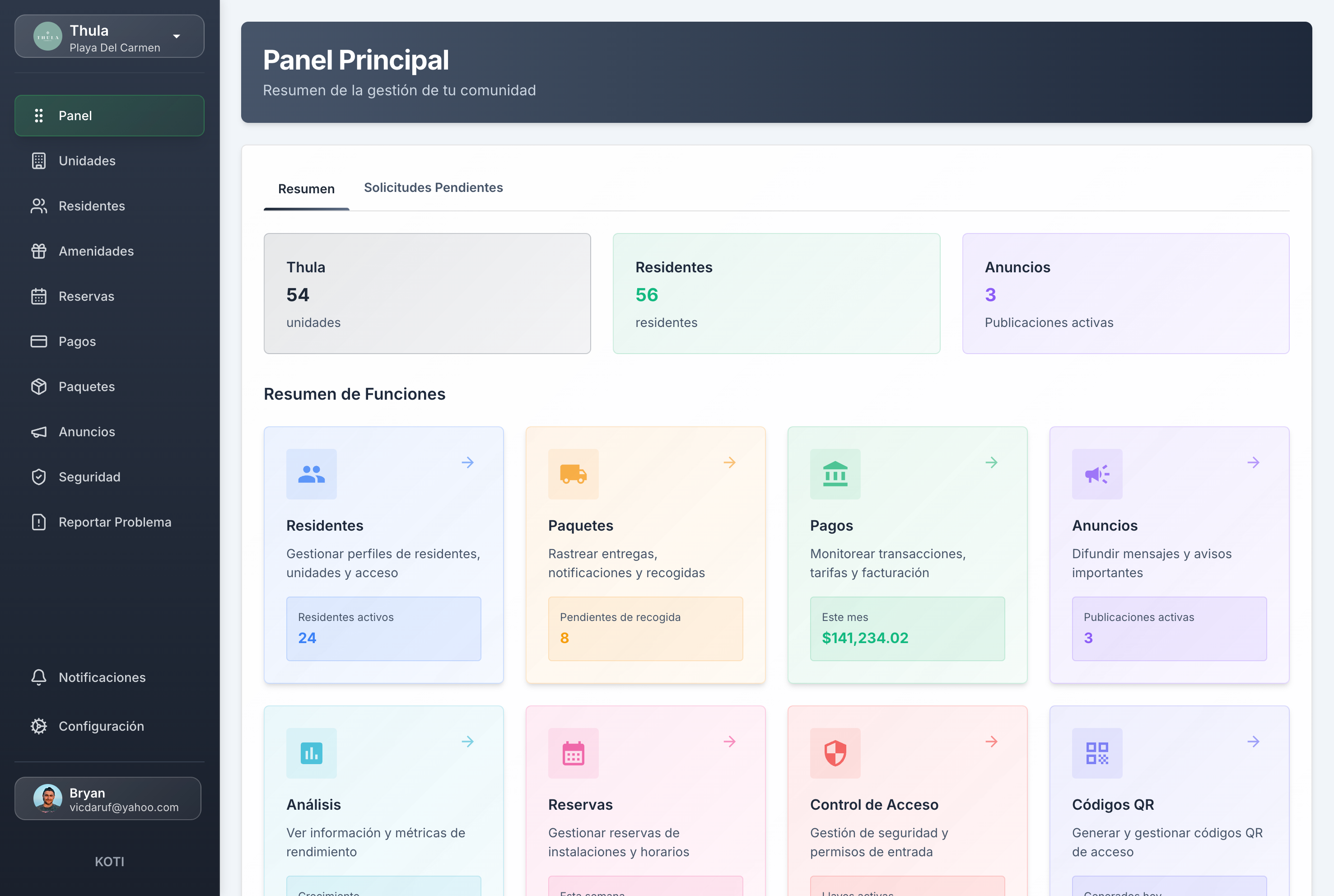
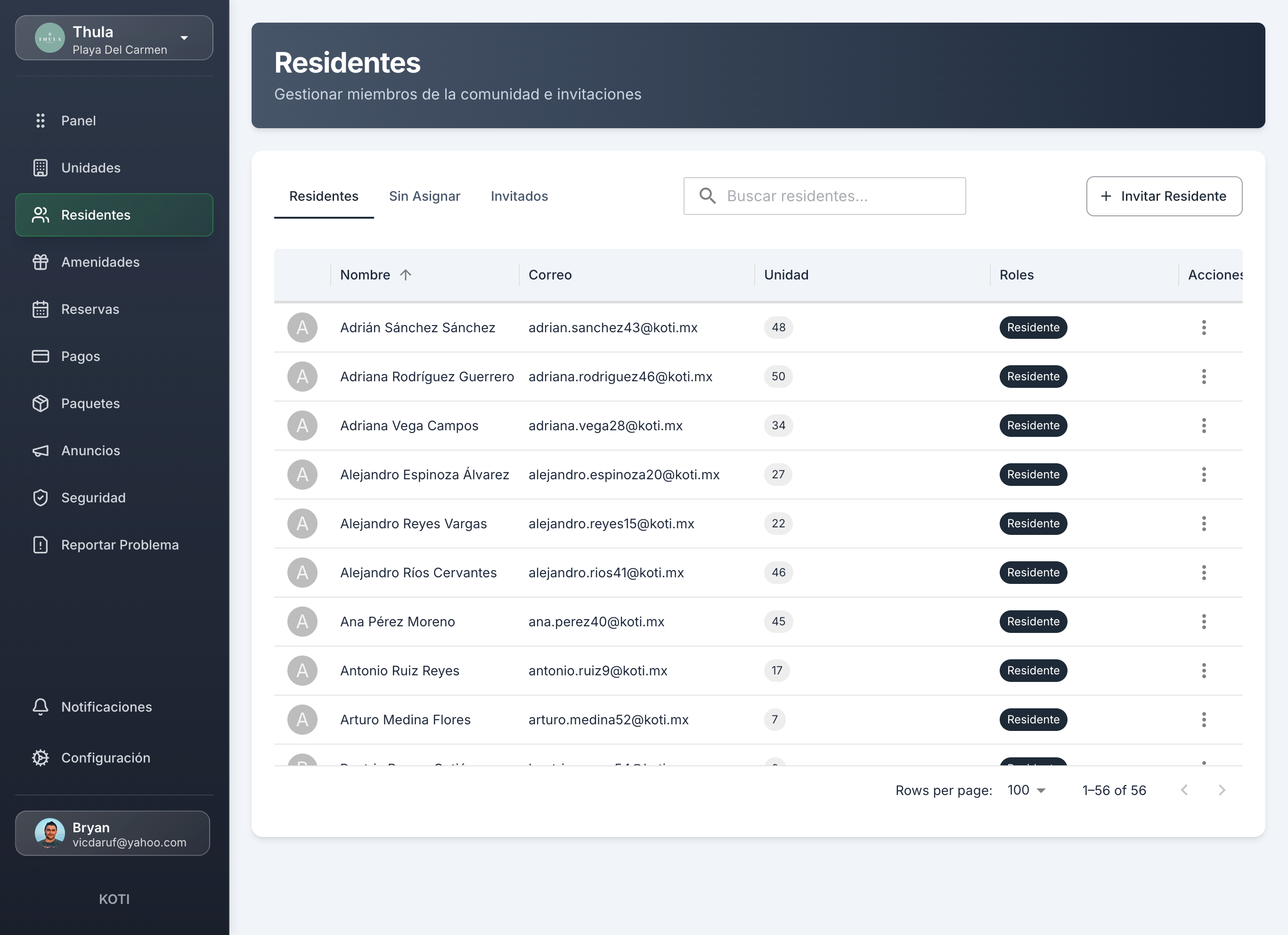
An effective collection system starts with a well-organized resident directory. Resident management allows you to keep contact information, payment history, and communication preferences up to date for each owner. When you know your community, you can personalize your collection strategy.
From paper to digital
Many condos still manage their finances with spreadsheets, paper receipts, and notebooks. This way of working is error-prone, difficult to audit, and consumes valuable time that could be spent improving the community. The digital transition doesn't have to be abrupt: you can start by digitizing fee collection and gradually incorporate more features.
The investment in technology pays for itself: condos that implement automated collection tools report improvements of 20% to 40% in their collection rate during the first six months.
Case Study: From 45% to 88% Collection Rate in 6 Months
To illustrate the impact of implementing these strategies, let's look at the case of a residential condo in Mexico City:
Initial situation: - 120-unit condo - Collection rate: 45% - Accumulated debt: more than 18 months of unpaid fees - No digital collection system - Communication only through physical notice board - Single payment method: bank deposit - No periodic financial reports
Actions implemented (months 1-2): - Digitization of resident directory with updated contact information - Implementation of collection platform with multiple payment methods - Activation of automatic reminders via email and push notification - Publication of first detailed financial report
Results at 3 months: - Collection rate: 65% (20 percentage point increase) - 30 delinquent residents caught up on payments - 15 residents accepted payment plans for accumulated debts - $180,000 MXN recovered in past-due debts
Additional actions (months 3-6): - Implementation of 5% early payment discount - Amenity restriction for residents more than 3 months behind - Community event to recognize current residents - Monthly publication of financial dashboard accessible to all owners
Results at 6 months: - Collection rate: 88% (total increase of 43 percentage points) - Only 14 units with arrears (vs. 66 units at start) - Average debt reduced from 8 months to 2.5 months - Sufficient budget to repaint facade and repair elevator - Overall resident satisfaction significantly improved
Key lesson: There is no single magic solution. Success comes from combining multiple strategies, being consistent in their application, and always maintaining empathetic communication with residents.
Frequently Asked Questions About Maintenance Fee Collection
How do you collect past-due maintenance fees in a condo?
The first step is to directly contact the delinquent resident to understand their situation. Offer a realistic payment plan that allows them to catch up without an impossible financial burden. If there's no response or willingness, apply the consequences established in the regulations gradually: late fees, amenity restriction, and as a last resort, legal action. Document every communication and maintain a detailed record of collection attempts.
Can you restrict access to common areas for delinquent owners?
You can restrict access to non-essential amenities such as party rooms, gyms, pools, or sports areas, as long as this measure is included in the condo regulations. However, you cannot restrict access to the owner's property, essential services (water, common area electricity, elevators), or transit routes within the condo. Always consult current local legislation.
What percentage late fee can be charged?
The late fee percentage must be established in the condo regulations, approved at assembly. It generally ranges between 2% and 5% monthly on the overdue balance. Some regulations also include late interest charges. It's important that the percentage is reasonable and not considered usurious. Verify the legal limits in your state.
How do you motivate residents to pay on time?
Combine positive incentives with clear consequences. Offer early payment discounts (5-10%), publicly recognize those who are current, hold quarterly raffles among punctual payers, and above all, demonstrate with transparent reports how every peso is invested. Trust and transparency are the greatest payment motivators.
Is it advisable to hire an external collection service?
Before resorting to a collection firm, exhaust internal options: automated reminders, payment plans, and direct communication. External collection services charge commissions that reduce what's recovered and can damage the relationship with residents. If you decide to use one, make sure they comply with the Credit Information Societies Law and don't employ abusive practices. For most condos, implementing a financial management platform like Koti produces better results at lower cost.
Improving maintenance fee collection is not just a financial matter -- it's an investment in the quality of life for your entire community. Every peso collected translates into better security, well-maintained common areas, and a place where families enjoy living.
The strategies we've shared in this guide don't require specialized knowledge or large investments. What they do require is consistency, empathy, and the right tools. Technology can be your greatest ally: from automatic reminders to transparent financial reports, digitizing the collection process eliminates friction and builds trust.
Remember that behind every fee there's a person with their own circumstances. An approach that combines firmness with understanding will always produce better results than threats or confrontation.
Ready to transform your condo's financial management? Explore Koti's financial tools and discover how hundreds of communities are already improving their collection rates. We also recommend reading our guide on the most common problems in condo management for a comprehensive view of condo administration.
Written by
Equipo Koti
Condo Management Experts
The Koti Smart Communities team shares knowledge and best practices for efficient condo and residential community management.
Related Articles
7 Best Condo Management Software in Mexico [2026]
Detailed comparison of the 7 best condo management software in Mexico. Features, pricing, pros and cons of each platform.
QR Access Control for Condominiums: Complete Implementation Guide
Learn how to implement a QR code access control system in your condominium. Step-by-step guide with benefits, code types, security best practices, and how to choose the right provider.
10 Common Condo Management Problems and How to Solve Them
Discover the most frequent problems faced by condo administrators in Mexico and practical solutions for each one.