Condo management comes with unique challenges that can complicate life for both administrators and residents. However, most of these problems have proven solutions that, when applied correctly, can transform the coexistence and operation of any community.
In this article we go through the 10 problems that recur most in Mexican condominiums, cotos, privadas and fraccionamientos, and what to do about each one. Where the answer depends on your state's law, we name the article so you can check it yourself.
1. Delinquency in Fee Payments
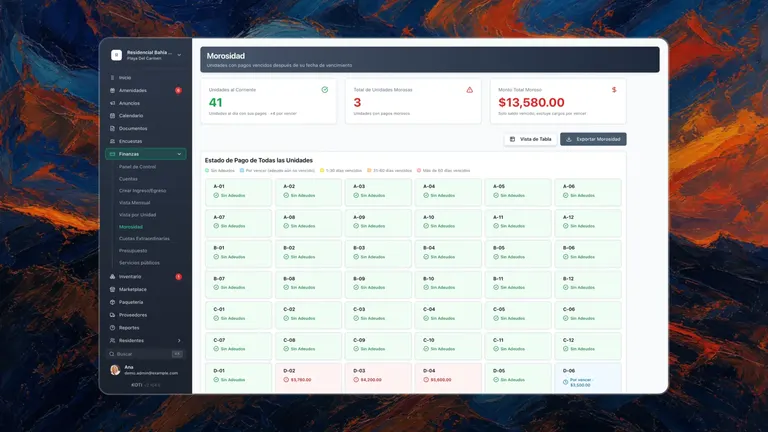
Delinquency is the number one headache, and it sits behind half the other nine problems on this list: with no collections there is no budget, and with no budget maintenance falls apart. The circle closes on its own, because deteriorating services hand more neighbours an excuse not to pay.
The essentials fit in three ideas. Make paying easy and automate the reminders before the due date, not after. Publish the financial statement every month, because distrust about where the money goes is as real a reason for non-payment as a cash shortage. And apply the consequences the law already gives you through delinquency control and late fees rather than improvising them: in Mexico City the late fee has a ceiling — the legal interest rate, 9% per year maximum (art. 33 fr. V) — and a delinquent owner loses their vote by operation of law (art. 34, which also defines them as anyone owing two maintenance fees or one extraordinary fee).
Careful with Quintana Roo, where that same voting restriction is not automatic: art. 67 fr. IV lists it among the sanctions a non-complying owner "may" receive, and art. 68 requires the General Assembly to impose and assess them, summoning the offending owner so they can state their case. Refusing the vote at the door, with no such resolution, makes the whole assembly challengeable.
The rest — escalation protocol, payment agreements and when civil enforcement is worth it — is covered in depth in how to deal with delinquent neighbours.
2. Neighbor Conflicts
The problem:
Neighbor conflicts range from noise complaints to disputes over parking or pets. These problems can escalate quickly and create a hostile environment throughout the community.
Most frequent situations:
- Excessive noise (parties, pets, children)
- Improper use of common spaces
- Parking in unauthorized places
- Odors and smoke (cooking, tobacco)
- Damage to common areas
Solutions:
- Clear internal regulations: Ensure the regulations specify quiet hours, pet rules, parking usage, and consequences for non-compliance.
- Structured complaint process: Implement a formal system to register complaints that allows documenting incidents and follow-up.
- Neutral mediation: As administrator, act as an impartial mediator. Listen to all parties before making decisions.
- Preventive communication: Before events that may cause disturbances (parties, construction), encourage residents to notify their neighbors.
- Coexistence committee: Form a neighborhood committee that helps resolve minor conflicts before they escalate.
3. Poor Maintenance
The problem:
Deterioration of common areas affects residents' quality of life and can devalue properties. Neglected gardens, broken elevators, waterproofing problems, and outdated electrical systems are frequent complaints.
Why it happens:
- Lack of budget (related to delinquency)
- Absence of preventive maintenance program
- Unreliable vendors
- Lack of coordination between staff and management
Solutions:
- Preventive maintenance program: Create an annual calendar with all necessary maintenance activities. Koti's dashboard allows scheduling and tracking these tasks.
- Adequate reserve fund: the law requires the fund but rarely sets the amount — Mexico City demands it with no minimum (art. 55 fr. II) — so the percentage is agreed by the assembly. Before taking the 5-10%-of-budget rule of thumb as given, check what your state's instrument actually says.
- Qualified vendors: Maintain a directory of evaluated vendors with verified references.
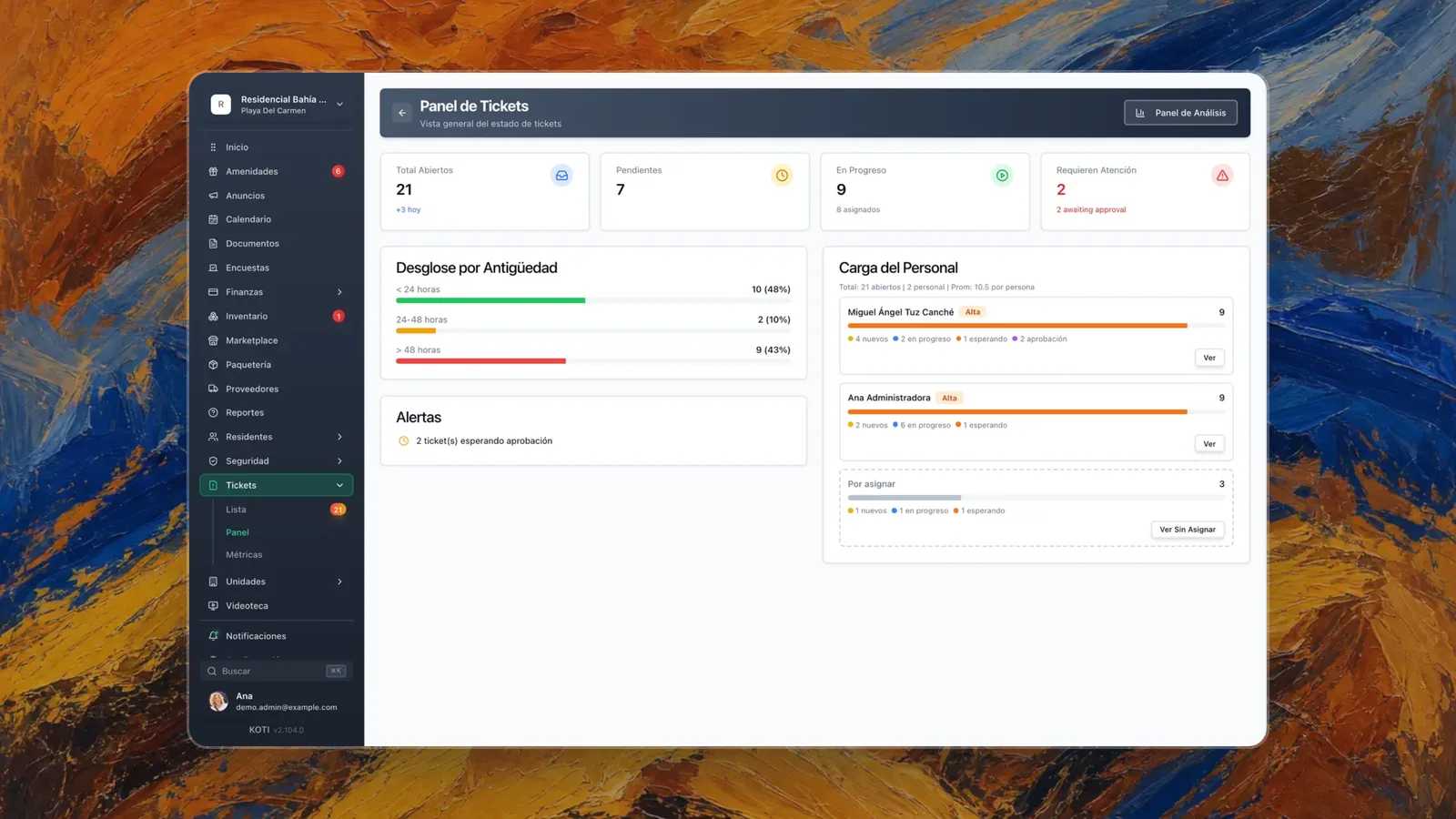
- Resident reports: make it easy for residents to report problems from the mobile app and have every report become a task with an owner and a date. Maintenance tickets are what separates a complaint in the WhatsApp group from something somebody has to close.
- Periodic inspections: Conduct documented monthly walk-throughs to identify problems before they worsen.
4. Security Problems
The problem:
Security is one of the main concerns of Mexican residents. Uncontrolled access, poorly trained guards, lack of protocols, and outdated technology leave communities vulnerable.
Main risks:
- Unauthorized person access
- Theft in common areas and parking lots
- Lack of visitor registration
- Security staff without adequate training
Solutions:
- Digital access control: Implement QR code systems for visitors that generate automatic records and prevent unauthorized access.
- Guard app: Equip your staff with a specialized application that allows them to verify access, record incidents, and communicate in real-time.
- Clear protocols: Document procedures for different scenarios: visitors, deliveries, emergencies, night hours.
- Continuous training: Invest in security staff training, not only in technical skills but also in customer service.
- Complementary technology: Consider surveillance cameras at strategic points with cloud storage.
5. Lack of Assembly Participation
The problem:
Achieving quorum in owner assemblies is a constant challenge. Owner apathy makes it difficult to make important decisions and can paralyze necessary improvements.
Causes:
- Inconvenient schedules
- Very long or disorganized assemblies
- Perception that their vote doesn't matter
- Unresolved previous conflicts
Solutions:
- Attractive notices: Clearly communicate the topics to be discussed and their importance to each resident.
- Convenient schedules: Survey residents to find the best time. Consider weekends or virtual meetings.
- Efficient assemblies: Prepare a clear agenda, set times for each topic, and send supporting documents in advance.
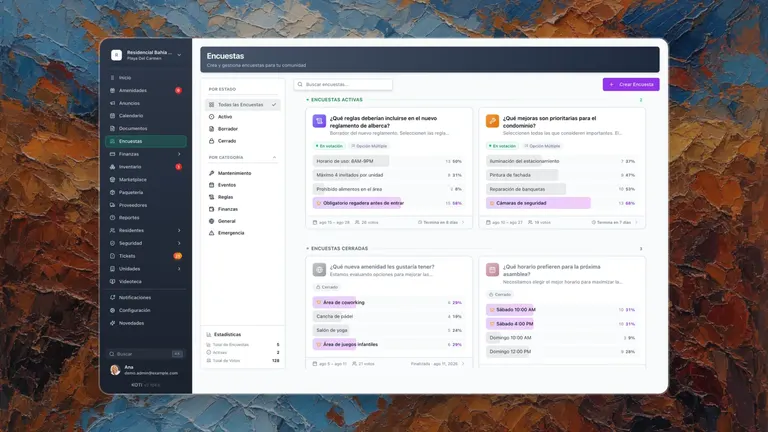
- Digital voting: Check your state first, because it is not uniform. Quintana Roo expressly allows electronic voting and remote assemblies (art. 28 fr. XIV, 2021 reform), and Jalisco allows remote sessions with identification, real-time interaction, roll-call voting and an audiovisual record (Civil Code art. 1025 bis). Mexico City's statute, by contrast, contains no provision for electronic assemblies or voting: there you should lean on the internal bylaws and take legal advice before replacing the in-person assembly.
- Accountability: Show concrete results from previous decisions to demonstrate that participation has impact.
The full procedure — the notice, the deadlines, calculating quorum on the undivided share and drawing up the minutes — is set out in our guide to running an owners' assembly.
6. Inefficient Communication
The problem:
Lack of communication or inadequate channels generate misinformation, rumors, and distrust. Residents feel ignored and management loses credibility.
Symptoms:
- Complaints that "nobody tells us anything"
- Rumors and gossip about administrative decisions
- Messages that don't reach all residents
- Contradictory information from different sources
Solutions:
- Centralized official channel: Use a single communication platform where you publish all official notices.
- Proactive communication: Don't wait for them to ask. Regularly report on finances, scheduled maintenance, and committee decisions.
- Multiple formats: Combine digital notices with physical boards to reach residents of all ages.
- Two-way feedback: Create mechanisms to receive and respond to questions, suggestions, and complaints.
- Consistent periodicity: Establish a communication calendar (e.g., monthly report, weekly notices) to create clear expectations.
7. Document Disorganization
The problem:
Lost minutes, unfiled contracts, lost invoices... Lack of document organization hinders transparency, complicates administration handovers, and can create legal problems.
Consequences:
- Inability to verify previous agreements
- Problems in audits and administration changes
- Loss of warranties and vendor contracts
- Difficulty taking legal action when necessary
Solutions:
- Complete digitization: Scan and store all important documents in a secure cloud system.
- Standardized classification: Create folders by category: assemblies, finances, contracts, maintenance, legal.
- Automatic backups: Ensure information is automatically backed up to prevent losses.
- Controlled access: Define who can view and who can edit each type of document.
- Retention policy: Condominium statutes set no retention period in years. They require you to preserve the books and documentation (Mexico City art. 43 fr. IV, which also opens that inspection only to owners current on their fees; Quintana Roo art. 36 fr. III) and to hand them to the incoming administration — which in Mexico City lives in a different article: art. 44 gives seven calendar days from the day after the appointment, with a record signed by everyone involved. How long tax and accounting records must be kept is governed by tax rules, not condominium law: confirm it with your accountant before destroying anything.
8. Chaotic Package Management
The problem:
With the rise of e-commerce, condos receive more and more packages. Without an adequate system, packages get lost, are delivered to the wrong people, or accumulate without residents knowing they arrived.
Problematic situations:
- Packages without clear identification
- Residents who don't know they have pending deliveries
- Accumulation in inadequate areas
- Disputes over lost packages
Solutions:
- Digital registration system: Implement a package tracking system that records each delivery with photo, date, and time.
- Automatic notifications: Send instant alerts to residents when a package arrives in their name.
- Designated area: Assign a specific and organized space to store packages, with controlled access.
- Time limit policy: Establish a maximum period to pick up packages (e.g., 7 days) before taking other measures.
- Receipt signature: Require signature or digital confirmation at the time of delivery to the resident.
9. Amenity Use Conflicts
The problem:
Event halls always occupied, last-minute cancellations, residents who don't respect schedules, damage to facilities... Amenities can become a constant source of conflicts. In horizontal cotos and fraccionamientos it shows up differently: it is not the hall, it is the pool and the court on a long weekend, with guests multiplying the headcount.
Typical problems:
- Double or systemless reservations
- Users who exceed permitted time
- Damage without identified responsible parties
- Noise complaints at events
Solutions:
- Online reservation system: Implement a booking platform that shows real-time availability and avoids conflicts.
- Specific regulations: Clearly define schedules, maximum capacities, deposits, and consequences for non-compliance.
- Security deposit: Charge a refundable deposit for events to cover possible damage.
- Before and after inspection: Document the condition of facilities before and after each use.
- Usage limits: Establish monthly reservation quotas per unit to ensure equitable access.
10. Frequent Administrator Turnover
The problem:
When administrators change constantly, continuity, institutional knowledge, and resident trust are lost. Each new administrator starts from scratch.
Causes:
- Inadequate compensation
- Lack of committee support
- Burnout from constant problems
- Conflicts with difficult residents
Solutions:
- Complete documentation: Maintain documented processes and use systems that preserve history regardless of who manages.
- Fair compensation: Ensure compensation is competitive to retain good administrators.
- Committee support: The oversight committee should actively support the administrator, not just criticize.
- Technology that preserves knowledge: Use digital tools where all historical condo information is recorded.
- Transition process: Establish a handover protocol that includes training and a supervised transition period.
Problems in condo management are common, but they don't have to be permanent. With the right strategies and adequate tools, it's possible to transform even the most conflictive communities into places where people enjoy living.
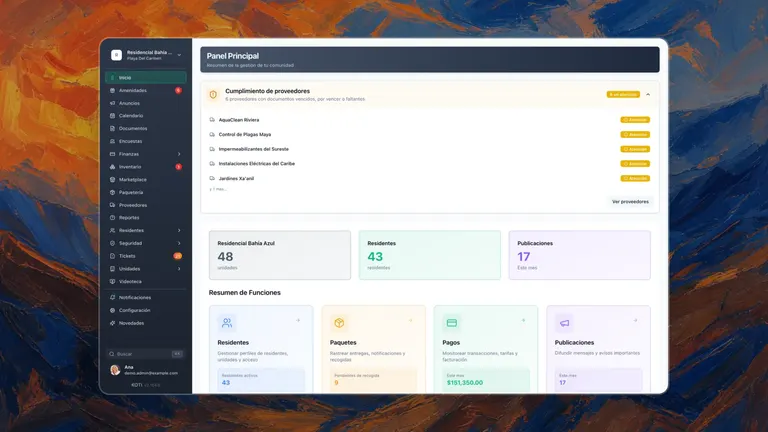
The key is to act proactively, communicate constantly, and stop splitting the community across six different tools: Koti puts the whole daily operation in one place, from access and packages to tickets and amenities.
Does your condo face any of these problems? Discover how Koti can help you resolve them effectively. You can also check our complete condo management guide for more information.
Try Koti for free
Simplify your condo management: dues, access and announcements in one place. 14 days free, no credit card.
Official sources
Every article cited in this guide was checked against the text published by the body that issued it. Condominium law in Mexico is state law: always read your own state’s, and confirm the date of the latest amendment before acting.
- Ley de Propiedad en Condominio de Inmuebles del Estado de Quintana Roo
Quintana Roo · Last amended: 12-11-2021 (P.O. del Estado) · Checked: 2026-08-09
- Ley de Propiedad en Condominio de Inmuebles para el Distrito Federal
Mexico City · Last amended: 04-08-2023 (G.O. CDMX) · Checked: 2026-08-09
This guide is general information, not legal advice. For a specific matter, consult a lawyer in your state.
Written by
Equipo Koti
Condo Management Experts
The Koti Smart Communities team shares knowledge and best practices for efficient condo and residential community management.