Managing a condominium in Mexico is a task that requires diverse knowledge, from legal aspects to communication and financial management skills. Whether you're starting as a professional administrator or part of a management committee, this guide will provide you with the necessary tools to manage your condo efficiently.
In Mexico, more than 15 million people live under the condominium property regime, making efficient management of these spaces fundamental to the quality of life of millions of families. Good management not only maintains common areas in optimal condition but also fosters harmonious coexistence among neighbors and protects property values.
What is a Condo Administrator?
The condo administrator is the individual or company responsible for executing the decisions of the general assembly and managing the day-to-day operations of the condominium. According to Mexican law, the administrator can be an owner elected by the assembly or an external professional hired for this purpose.
The main responsibilities of the administrator include:
- Financial management: Collecting maintenance fees, managing the reserve fund, paying suppliers, and presenting financial statements.
- Maintenance: Coordinating preventive and corrective maintenance of common areas, from gardens to elevators.
- Communication: Serving as a liaison between owners, convening assemblies, and communicating relevant information.
- Legal compliance: Ensuring the condo complies with all applicable regulations, including civil protection and local rules.
- Staff management: Supervising security, cleaning, and maintenance staff.
Legal Obligations of the Administrator
In Mexico, condo management is primarily regulated by state condominium property laws. Each state has its own legislation, although they share similar principles. The most important legal obligations include:
Registration and documentation - Keep the assembly minutes book up to date - Maintain financial statements and receipts for at least 5 years - Have the internal regulations and constitutive deed available
Assemblies - Convene the ordinary general assembly at least once a year - Notify all owners with the advance notice established in the regulations (generally 10-15 days) - Ensure the necessary quorum for voting
Finances - Present quarterly financial reports or as established by the regulations - Maintain bank accounts in the name of the condominium - Manage the maintenance fund and reserve fund separately
It is essential that as an administrator you know your specific state's law. For example, in Mexico City the Condominium Property Law applies, while each state has its own regulations.
Effective Maintenance Fee Collection
One of the biggest challenges in condo management is maintaining healthy cash flow through timely fee collection. Delinquency directly affects the ability to properly maintain common areas.
Strategies to improve collection:
- Make payment easy: Offer multiple payment options such as bank transfers, convenience store payments, and automatic debit. Technology solutions like Koti allow automating this process.
- Communicate clearly: Send reminders before the due date and detailed account statements showing how resources are used.
- Establish clear consequences: The regulations should specify late fees and restrictions for delinquent owners (such as amenity use).
- Act quickly: Don't let debt accumulate. Contact delinquent owners from the first month of delay.
- Document everything: Keep detailed records of all payments, reminders sent, and communications with delinquent owners.
How much should the maintenance fee be?
The fee should be calculated considering: - Monthly operating expenses (security, cleaning, services) - Reserve fund (generally 5-10% of the budget) - Scheduled preventive maintenance - A margin for unforeseen events
Common Area Maintenance
Proper maintenance of common areas is essential to preserve property value and ensure resident safety. A well-structured maintenance program includes:
Preventive maintenance Create an annual calendar that includes: - Monthly review of electrical and plumbing systems - Quarterly elevator maintenance (legally required) - Roof waterproofing every 2-3 years - Facade painting as required by regulations - Periodic fumigation of common areas
Corrective maintenance Establish a protocol for urgent repairs: - 24/7 reporting line for emergencies - List of trusted vendors for different services - Contingency budget for unexpected repairs
Maintenance documentation It is important to keep records of: - Dates and description of work performed - Contracted vendors and quotes - Equipment and service warranties - Before and after photographs
Digital management tools greatly facilitate this documentation and allow generating reports for assemblies.
Technology in Condo Management
Digital transformation has also reached condo management, offering tools that significantly simplify management:
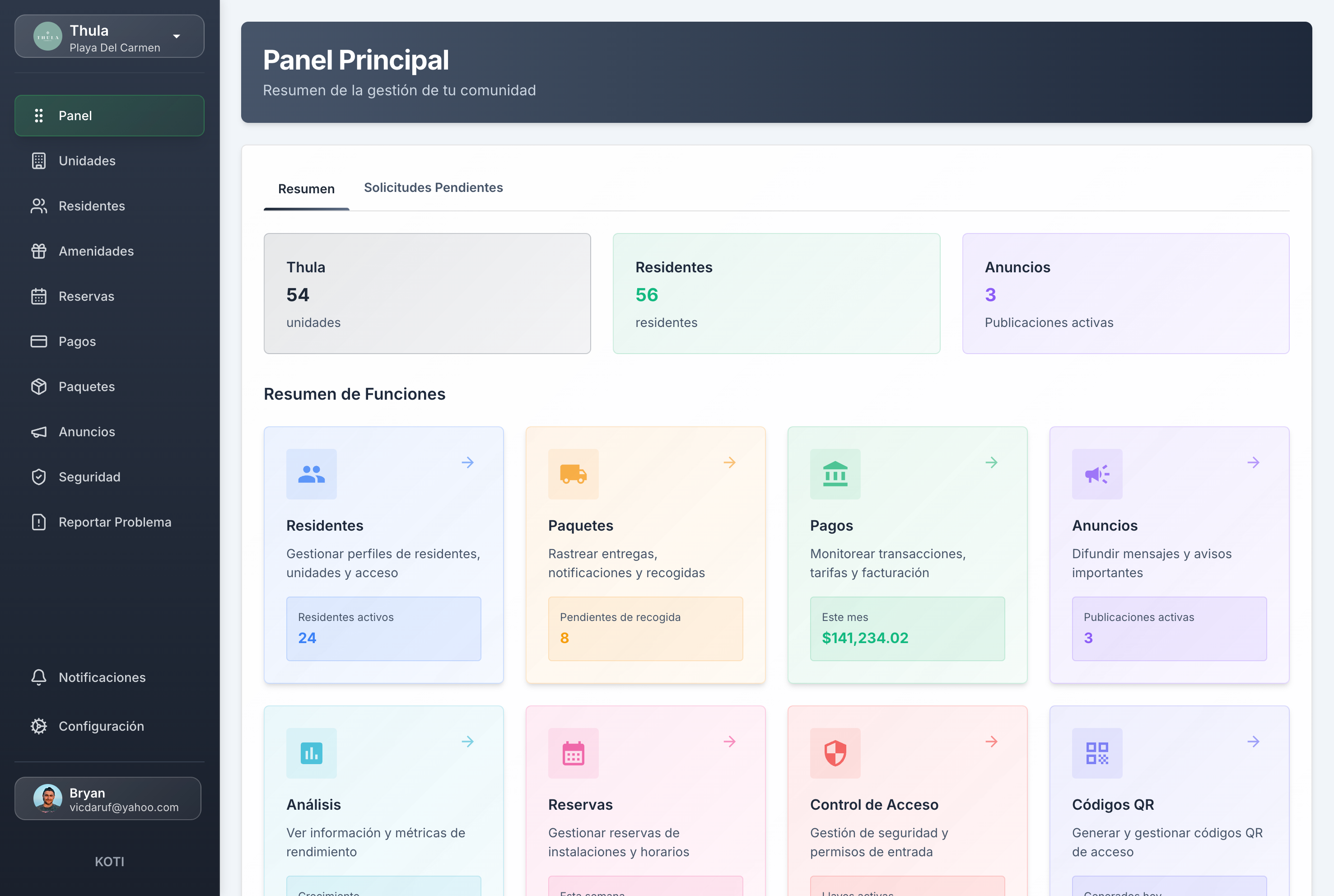
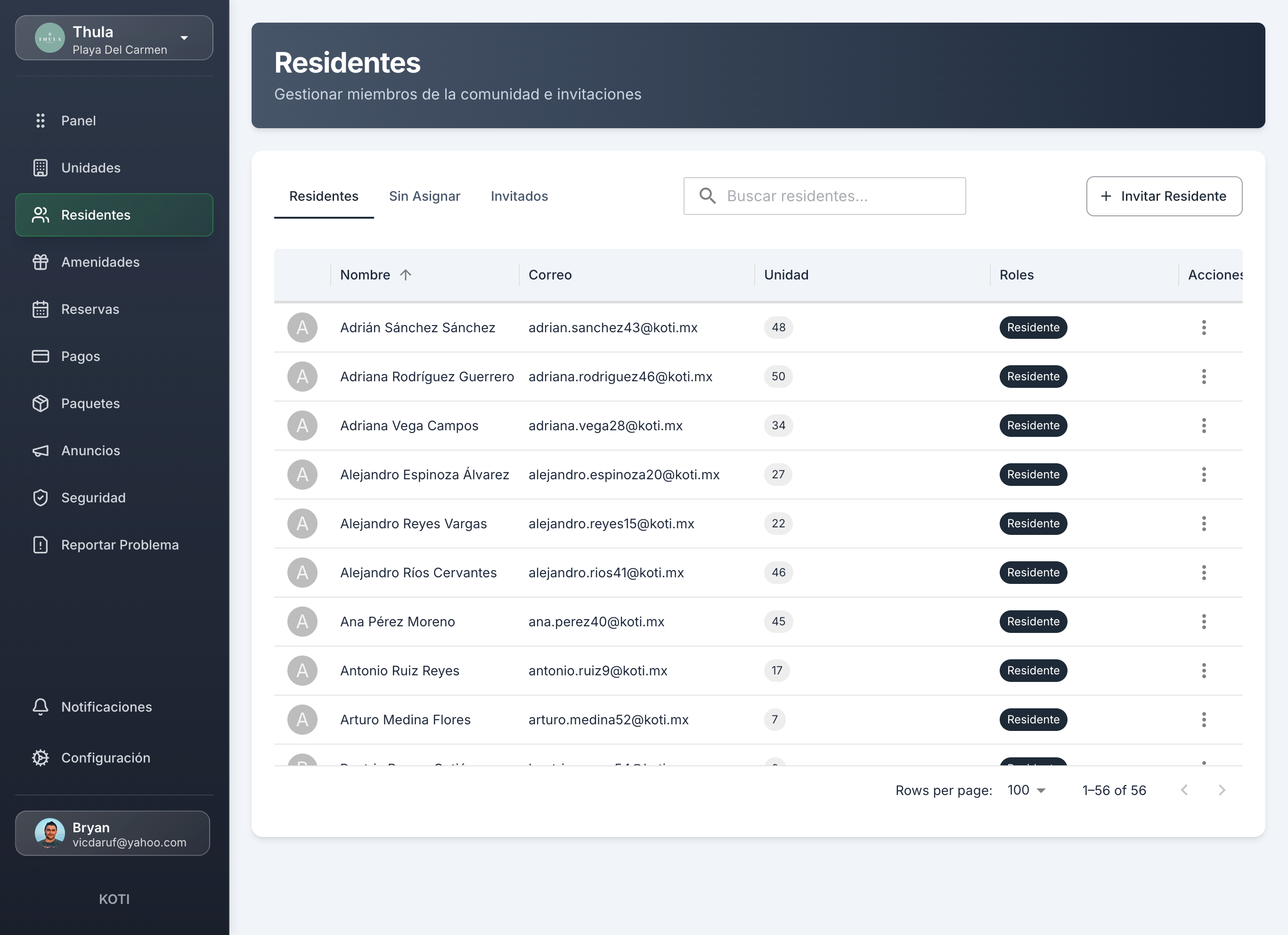
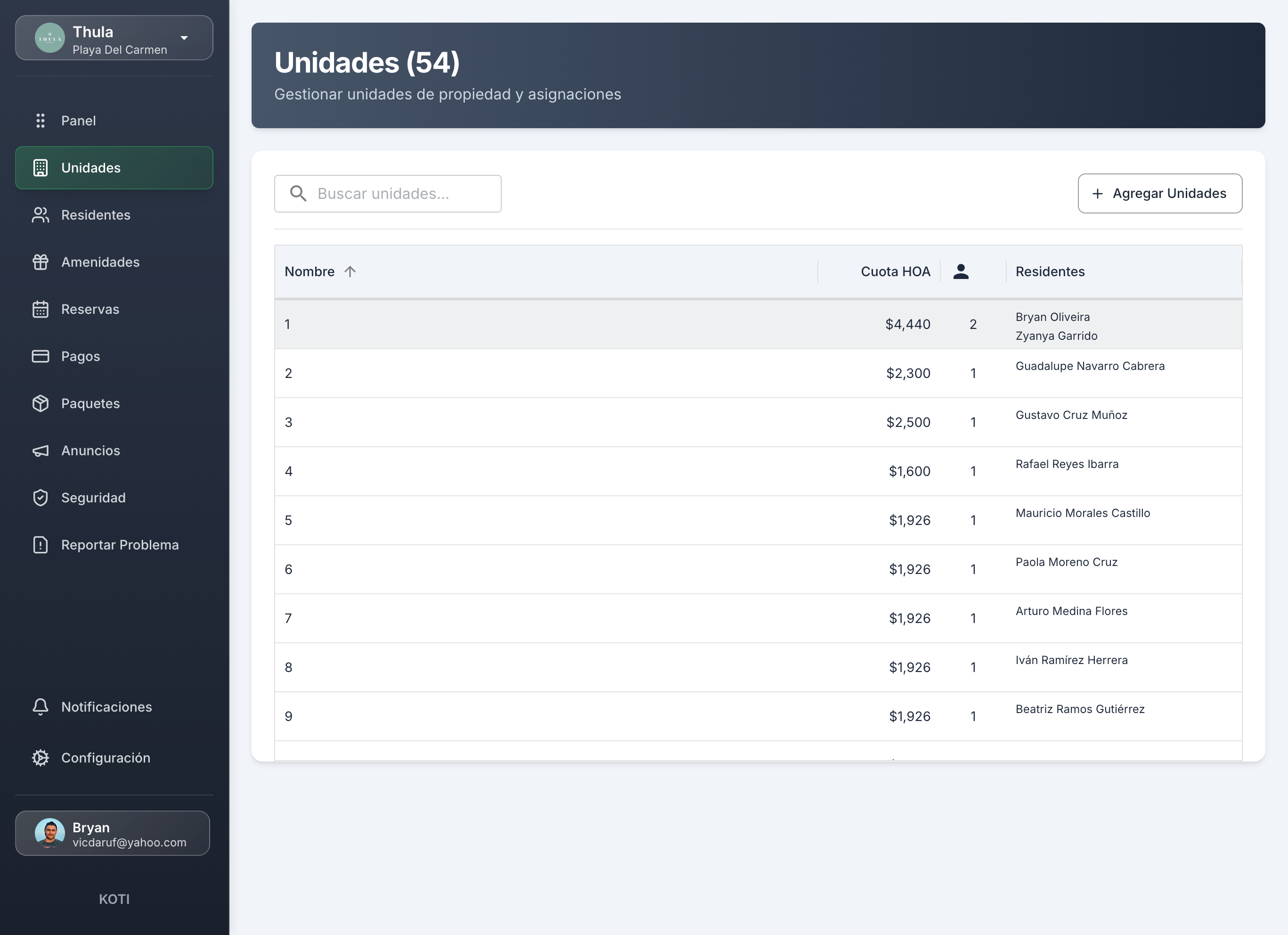
Management software Modern platforms like Koti offer: - Resident management with digital directory - QR code access control for visitors - Financial administration with automated collection - Amenity booking online - Package tracking with notifications
Benefits of digitalization - Administrative time reduction of up to 50% - Greater transparency with real-time information access - Better communication between management and residents - Complete and accessible history of all operations - Reduction of errors in financial management
Digital security Digital access control not only improves the physical security of the condo but also provides: - Record of all entries and exits - Unique codes for visitors with limited validity - Real-time alerts for the administrator - Activity reports for assemblies
Communication with Residents
Effective communication is the foundation of a good relationship between management and owners. Conflicts in condos frequently arise from misunderstandings or lack of information.
Recommended communication channels - Bulletin board: For official and emergency communications - App or digital platform: For daily communication and notifications - Email: For formal documents and meeting notices - WhatsApp group: For informal communication and emergencies (with clear usage rules)
Communication best practices 1. Be proactive: Don't wait for residents to ask. Regularly inform about the condo's status. 2. Be transparent: Share financial statements and explain how resources are used. 3. Listen actively: Create mechanisms to receive suggestions and complaints. 4. Respond promptly: Establish maximum response times for different types of requests. 5. Document communications: Keep records of important notices and requests handled.
Conflict management When conflicts arise between neighbors or with management: - Listen to all parties before acting - Refer to internal regulations to resolve disputes - Document incidents and actions taken - Consider mediation for complex conflicts
Managing a condo in Mexico is a responsibility that requires dedication, knowledge, and the right tools. Professional management not only maintains the property in optimal condition but also contributes to the quality of life of all residents and protects one of their most important investments: their home.
Current technology allows simplifying many administrative tasks, freeing up time to focus on what really matters: creating communities where people enjoy living. If you're looking to modernize your condo management, learn how Koti can help with a comprehensive solution specifically designed for the needs of Mexican condominiums.
Do you have questions about managing your condo? Don't hesitate to contact us for personalized advice.
Written by
Equipo Koti
Condo Management Experts
The Koti Smart Communities team shares knowledge and best practices for efficient condo and residential community management.
Related Articles
10 Common Condo Management Problems and How to Solve Them
Discover the most frequent problems faced by condo administrators in Mexico and practical solutions for each one.
Condo Law in Mexico: Everything You Need to Know as an Administrator
Complete guide on condo legislation in Mexico: from the Condominium Property Law to tax obligations and owner rights.